Technical and professional capability
What participants learn to do.
- Software and AI fluency
- Domain knowledge
- Research
- Business skills
- Communication
- Sales
- Project execution
- Role-specific depth
Truth Academy Leadership Program
The thesis
Identify unusually high-potential people early.Invest heavily in their leadership, character, technical fluency, community service, and ability to execute real projects.Develop them into leaders who can then develop others.
Truth Academy exists to create unusually capable, high-agency people who can take responsibility for consequential work and execute in the real world.
Agency.
“World-class” is not defined by prestige, grades, or test scores alone. It means a participant develops unusual agency: when given a meaningful project, that person can understand the problem, organize the work, communicate with people, make sound judgments, recover from setbacks, and drive the work to completion.
Eight principles
They shape who is selected, what participants do each week, and how anyone advances from one stage to the next.
Start with about 10 students and invest deeply rather than optimizing for scale.
Develop people who can lead themselves, lead projects, and eventually develop others.
Technical weakness can be trained. Serious character problems are disqualifying.
Students advance by demonstrating execution and completing the program, not by accumulating seat time alone.
Every participant completes at least 5 hours of community service per month.
Every participant gains software and AI literacy, regardless of eventual specialization.
Participants receive carefully bounded community and client exposure appropriate to their maturity and risk level.
Older fellows and graduates progressively mentor younger participants, creating a self-reinforcing talent flywheel.
Two capabilities, in parallel
Every participant develops both at the same time. Neither one substitutes for the other.
What participants learn to do.
Who participants become.
The pilot at a glance
Projects are the center of the Academy. Every first-cohort project should require community interaction rather than being completed entirely behind a laptop.
Every week runs three strands side by side: a leadership theme, a skill session, and a project milestone. The project carries each team from choosing a real community problem to presenting what changed at Demo Day.
Weeks 1–4
Define the problem and prototype
By week 4: Prototype v1 or field intervention
Weeks 5–8
Build and test with the community
By week 8: Run community activity or deploy pilot
Weeks 9–12
Measure, improve, and present
By week 12: Demo Day + advancement review
Who it serves
The first cohort draws on local high school students. College students and the wider region join the picture at later stages.
High school students in two communities close to home.
High school students in the Ontario-Montclair community
Planned role: Primary early cohort source
High school students in the Jurupa Valley community
Planned role: Primary early cohort source
Planned as the program grows and the pilot proves its quality.
College students in the Inland Empire
Planned role: Near-peer mentors, later-stage fellows, interns, specialist pipeline
Other Southern California students
Planned role: Future expansion population
Who leads it
Raul Bedolla and John Sio co-lead the pilot. Each person below owns a distinct, named part of the work.

Director of Education
Co-leads the pilot and turns the leadership philosophy into repeatable programming.

Founder, Educator, and Mentor
Co-leads the pilot and leadership development, with a focus on character evaluation, mentorship, and leadership formation.
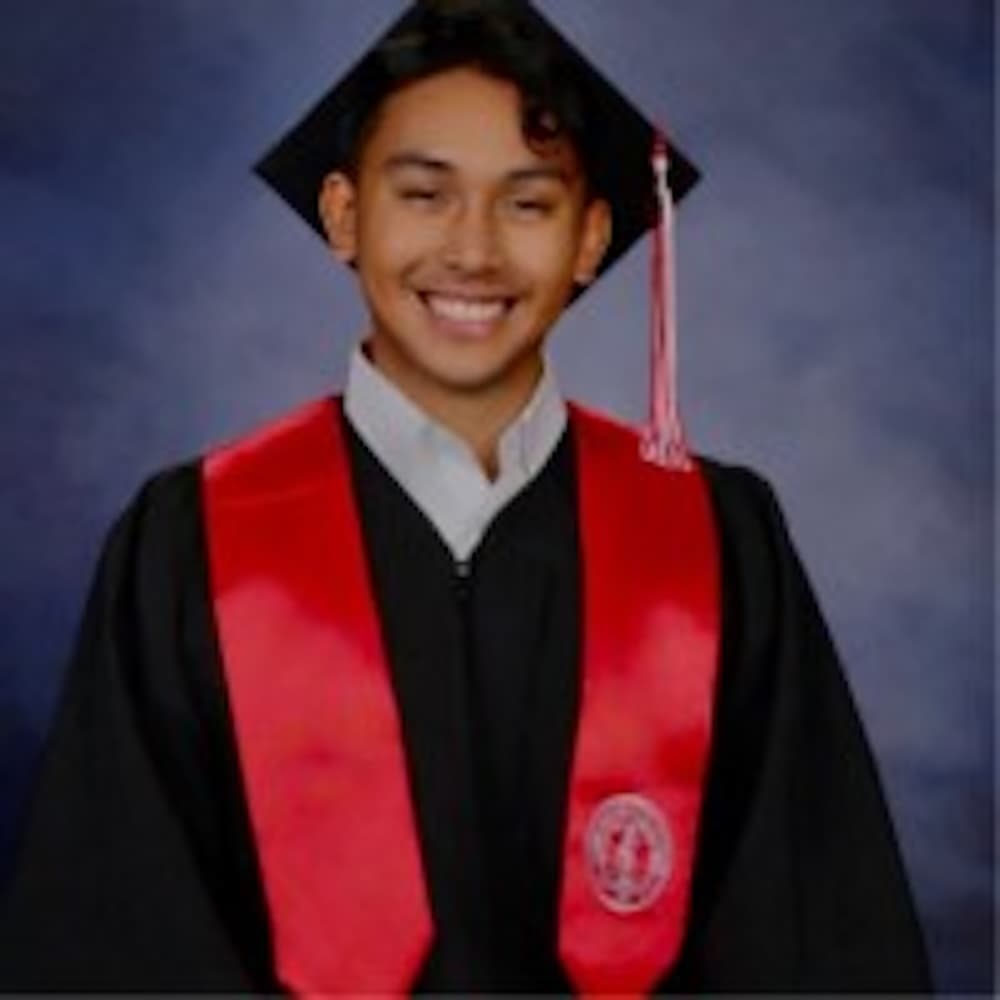
CEO/CTO of Truth Computing, Co-founder of Truth Academy
Teaches business and technology, and connects students with mentors, speakers, projects, and opportunities.
Raul Bedolla and John Sio co-own the Academy pilot and leadership development. Success looks like consistent student development, high standards, reliable program operations, strong cohort culture.
One named owner should exist for every program deliverable. Co-ownership is appropriate at the program level, but weekly tasks, student cases, events, and projects should always have one accountable lead.
The long-term pathway
Beyond the pilot, the pathway is designed to include further stages as the program grows. Each one is earned through demonstrated readiness, not time served.
About ages 16–18
About 18, in the transition to college or work
Late high school or college, as appropriate
College years
Early career
Post-program
Truth Computing initially underwrites the Academy so that the program can optimize for quality rather than sponsor requirements.
Truth Academy is intended to produce excellent people generally. At the same time, it is deliberately structured as a long-term talent pipeline for Truth Computing: as the program grows, the pathway is designed so that participants who thrive could progress from student to fellow to paid builder to intern to rotational employee and, potentially, long-term leader.
Every stage after Foundation describes what the pathway is designed to include as the program grows. Nothing here is an offer of employment, pay, or a scholarship.
The aim is excellent people, wherever they choose to go.
The talent flywheel
The long-term advantage is not simply that Truth Academy trains students. It creates leaders who know how to create more leaders. That is how a 10-person first cohort can eventually become a durable Southern California talent institution and a major source of exceptional people for Truth Computing and the wider community.
Find high-potential people
Develop them
Give them real responsibility
Teach them to lead
Have them develop others
Then the loop begins again: the people who were developed help find and develop the next cohort.
Selection
The first cohort will be about 10 students, chosen for potential, character, and agency rather than polish or prior access.
Nominations and applications haven’t opened yet. If you know a student who fits, or you are one, you can tell us now so the program team can follow up when they do.